
Foreign Ownership
buying an apartment unit
Thai condo laws define a 'condominium' as a building that can be separated into units for individual ownership and includes common properties (land on which the building sits, hallways, elevators, etc.). Only condominium buildings licensed under the condo act and registered with the land department as 'condominium' offer individual ownership of the units and joint ownership of the common areas and government issued ownership unit title deeds. Private 'holiday' apartment projects, not having obtained a condo license, do not offer ownership of the unit spaces nor joint ownership in the common areas, but only offer possession under private contract structures.
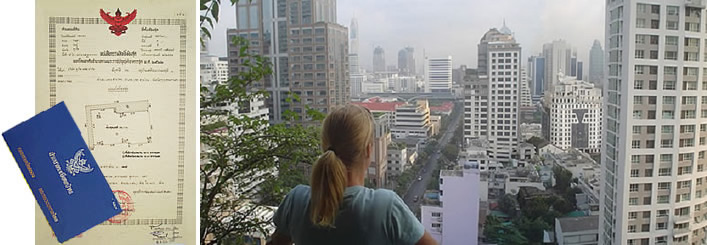
Holiday apartments
Private holiday apartments, tourist condos, leasehold apartments (not having a condo license) are not governed by specific apartment laws nor the Condominium Act but are governed by the Civil Code and managed according to the legal contract structure as created between the owner of the building and the occupants (tenants). True condominiums are regulated by its rules and regulations as accepted and amended by the joint owners, are managed by the joint owners and are governed by and must comply with the Thailand condo act (read more...).
Foreign ownership
In a licensed condo foreigners may own a unit within the foreign ownership quota. The condo act, section 19, governs foreign ownership and under this section foreign ownership is limited to 49% of the total floor area of all units in a condo building combined (also referred to as aggregate unit space or saleable floor area). More than half of the units must be Thai owned. When buying a condo as a foreigner in Thailand it must be confirmed that foreign ownership in the condominium building is available. A leased or 'leasehold' condo in Thailand is a poor alternative for freehold.
Section 19 (2) 'each condominium shall have foreigners or corporate entities as indicated under section 19 first paragraph holding ownership in the units collectively not exceeding forty-nine percents (49%) of the spaces of the whole units in such particular condominium at the time of making the registration of such condominium in accordance with Section 6'.
Foreigners eligible for ownership of a unit
There are no ownership restrictions based on nationality or specific visa categories and every foreigner who can enter Thailand legally can buy and own a condo, but foreigners must qualify for ownership under section 19 of the condo act. Generally this means that the foreigner must have transferred the full purchase price for the unit into Thailand as foreign currency and have this amount exchanged into Thai baht by the recipient bank inside Thailand and obtained proof of the transfer and exchange of foreign currency (foreign exchange transaction (Thai) forms). The following foreigners are eligible for ownership: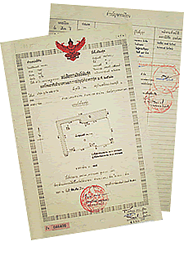
- foreigners permitted to have residence in the Thailand under the immigration law;
- foreigners permitted to enter into Thailand under the investment promotion law;
- juristic entities as provided in section 97 and 98 of the land code and registered as a juristic person under Thai law;
- companies (juristic entities) under section 4 of the foreign business act and having obtained an alien business license;
- foreigners or juristic person regarded by law as foreign who have brought in foreign currency into Thailand and exchanged and withdrawn Thai baht from the Thai baht account or foreign currency account.
A foreigner eligible under 5 above must obtain proof of the remittance and foreign currency exchange to Thai baht from the recipient bank in Thailand and submit these documents (FET-form) at the time of ownership registration of the unit at the land department's branch or provincial land office.
Condo unit sale and purchase agreement
The most important part of a condo purchase in Thailand is the agreement of purchase and sale. This contract deals as a way of finalizing the interests of the seller and buyer before closing the deal. When buying a unit in a newly built condominium the sale agreement between the developer and buyer must comply with regulations issued under condo and consumer protection laws and the buyer finds some protection in the law. In a private resale of a condo or a leasehold sale the contracts are governed by general contract law and the parties can agree on various terms that can benefit one party more than the other. A sale and purchase agreement for a condo covers among others:
- exact details of the unit,
- exact details of the parties
- the agreed price and payment schedule and possible deposit,
- transfer date of the condo at the land office,
- responsibilities for transfer fees and taxes,
- warranties of the seller and buyer and matters relating to due diligence.
Before you hand over a deposit or sign a contract the pre-contract phase should include a professional review of the sale contract (or should be compared to the template contract) and a standard due diligence check at the local land office to assure the seller is the owner of the condo unit and is free to dispose of the unit and to assure that there are no encumbrances registered against the title and foreign ownership is available in the condominium.
Land office sale and transfer procedure
At the time of transfer and registration of ownership at the Land Department's branch office an official standard Thai script sale agreement is signed but this does not affect the private agreement between the parties. It should be noted that everything at the Land Registry is done in Thai.
When buying a condo (re-sale) the seller must bring all original documents of the unit, ownership deed, tabien baan, supply a letter of guarantee issued by the condominium juristic person that the condo unit falls within the 49% foreign ownership quota and a letter that there are no outstanding fees for the unit to the condo juristic person. Other documents required at the transfer are among others the ID-cards or passports and entrance card, a marriage or divorce certificate (if applicable), a Thai script land office Tor Dor 21 power of attorney if someone is representing the buyer, a cashier's check guaranteed by a bank for payment of the balance of the purchase price to the seller, cash to cover the transfer fees and taxes and proof of remittance and exchange of foreign currency into Thai baht (FET documents).
Transfer fees, duties, revenue taxes
When ownership of a condo apartment is transferred at the local land office there are taxes and fees to be paid:
- ownership transfer fee,
- specific business tax (if applicable),
- stamp duty,
- income withholding tax (personal or corporate).
How the above costs are split between buyer and seller of the unit depends on what is agreed in the sale agreement and in practice this can vary from buyer pays all to seller pays all. When buying from a developer the developer is under consumer protection laws only allowed to ask up to half of the 2% ownership transfer registration fee from the buyer, but not more and all other costs are for the developer.
Read more: Transfer of ownership and taxes and fees
Purchase price and payment terms
When condo is not new (new construction) but a resale the purchase price is usually paid by 'cashier cheque' (a cheque issued by the bank that also issues the foreign exchange forms) at the time of ownership registration at the local land office. When it is a new or off-pan condo the purchase could either be paid by installments into a separate third-party escrow account or could be partly or fully paid directly to the developer prior to transfer of ownership (using escrow in Thailand.
Proof of ownership of a condo unit in Thailand
When it is a true licensed condo the transfer and registration of ownership of a condo and amendments on the title deed always takes place at the land department's local or provincial land office. The unit title deed is the certificate for ownership of the condo unit and is issued and administrated by the local or provincial land office where the condo is located. The person having their name shown on the apartment unit deed has the legal right to the unit. Each apartment unit in a condominium building has an ownership title deed issued by the Land Department (sample image above). The title deed contains among others the following information:
| 1. position and location of the land and area of the land of the condominium. 2. plan of the apartment unit showing location, the width, length and height. 3. ratio of ownership of common property and owner's voting rights percentage. 4. name and surname of the person having the ownership of the apartment. 5. index for the registration of rights and juristic acts. 6. signature of the competent official. 7. position seal of the competent official. |
 |
Maintenance management fees and sinking fund
Condo fees (maintenance fee, management fee) are charged by a condominium juristic person from the owners to cover the cost of tax and duties, repairs, common services as well as equipments, appliances and facilities, expenses incurred as a result of the looking after, maintenance and operations of common property in accordance with the ratio of the freehold in common property (section 18 of the Condominium Act).
Tabien Baan
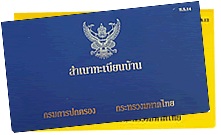
The tabien baan or house book of the condo (sample right above) is the resident registration book administrated by the local municipality. The house book could state who the owner is on the first page but not necessarily and registers the Thai persons having legal residence at the condo. A tabien baan is not an important document for foreigners and foreigners owning a condo in Thailand usually have an empty blue book. The only evidence of ownership of a unit is the condo unit title deed.
Inheritance and property tax
The foreigner obtains ownership of the unit for his life. His foreign heirs may inherit the unit but may not also be able to register ownership of the unit as the condo act specifically refers to foreign heirs qualified under the condominium act and foreign heirs or legatees unqualified for ownership. A foreigner who receives a condo in Thailand by inheritance or through a gift must again personally qualify for ownership under section 19 of the Condominium Act, or he must (section 19 under 7) sell the unit within one year of acquisition by inheritance.
inheritance tax
Thailand does not have a specific inheritance tax system but upon transfer of ownership of a real estate property the transfer fees and taxes must be paid. When a condo is sold taxes and fees are paid at the land office at the time of transfer. This includes personal income withholding tax. With the land office tax-receipt, sale documents and documents confirming the previous transfer of foreign currency into Thailand the bank is allowed to transfer the full amount received from the sale of a condominium by a foreigner out of Thailand.
rental income and property tax
A foreigner is free to rent out his unit unless it is considered operating a business of renting out properties in Thailand under the foreign business act and the foreigner is considered 'working' under the foreign employment act. Rental income in Thailand is subject to personal income tax (assessable income from Thai sources) and over properties not used as a private residence of the owner 'housing and land tax' must be paid to the local authorities.
Common mistakes
when buying a condo in Thailand
- Not having clearly agreed in a new construction that the purchase concerns a freehold purchase of a condo registered under the condominium act, and not as an alternative (and/or) a leasehold purchase;
- Not dealing with a registered condominium under the Thailand condo act but an unregistered holiday or leasehold apartment building.
- Not having transferred foreign currency into Thailand at least equal to the purchase price (not qualifying under section 19);
- Not having obtained legal advice on how taxes and transfer fees are to be divided and ending up paying more than necessary;
- Not having obtained legal advice on the condominium sale and purchase agreement and required terms and conditions and responsibilities of the parties;
- Not having conducted due diligence on a project or unit and being confronted with unexpected issues after signing the purchase agreement and having paid a unsecured deposit;
- Not having agreed escrow in the payment schedule and being confronted with default by the seller after part payment of the purchase price and prior to transfer of ownership;
- Not having checked the unit title deed and previous land office sale agreement to ensure that the apartment is free of encumbrances.
external links for this page:
- apartment acquisition in Thailand by foreign nationals
- Holiday apartment versus condominium units
- sale and purchase agreement (foreign ownership)
- ownership transfer tax and fees
- contract payment terms for a condominium apartment unit
- FET form explained
- apartment unit ownership's deed translated
- succession foreign ownership of a condominium unit
- Thailand condominium apartment laws (translation)