Leasing Property in Thailand for Foreigners

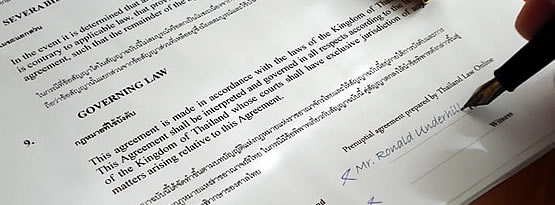
Leasing property is one of the most common ways for foreigners to obtain rights to use land, a house, villa or condominium in Thailand. A lease may be a short residential tenancy for a few months or a registered long-term land lease connected with a substantial investment.

Although these arrangements are governed by the same lease provisions of the Thai Civil and Commercial Code, the legal and practical considerations are very different. A one-year apartment rental is not the same as a registered 30-year land lease intended to protect a house or land investment. This article gives a practical overview of property leases in Thailand for foreigners, including short-term rentals, long-term leases, Land Office registration, lease structure, renewal issues, consumer protection rules and common mistakes.

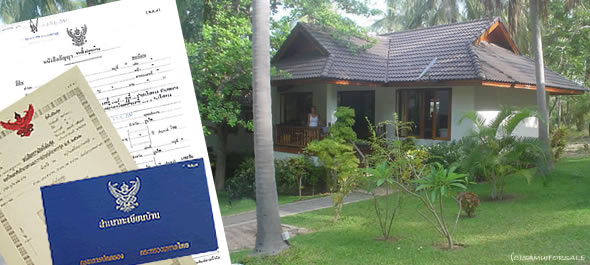
Thai style building and owner's documents

Buying a Thai Home
foreign ownership of a house

Foreigners cannot own land in Thailand but are allowed to lease land under a land lease agreement registered with the land department and own the structure built on leased land. Obtaining the correct legal ownership of the building upon the leased land greatly increases the land lessee's rights and long term interest in the property. The right to own a building upon another man's land however always relates to the right to use and possess the land, i.e the term of the land lease (and optional the term of an additional right of superficies).

Buying, Owning and Registering a Boat in Thailand

Foreigners can generally purchase and own a boat in Thailand. However, different legal rules apply depending on whether the vessel is privately owned for recreational use or intended for commercial operations. This article provides a general overview of Thai law relating to the purchase, registration and commercial use of boats and other vessels. This article focuses primarily on vessels intended for commercial use under Thai law.

last update July 2026

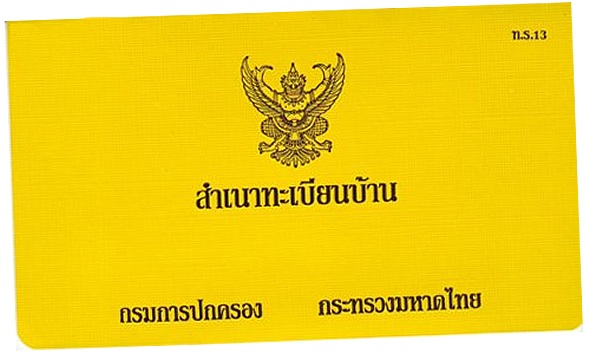
Yellow House Registration Book (Tabien Baan Thor.Ror.13)

The Yellow House Registration Book (Tabien Baan Thor.Ror.13) is an official document issued to foreigners who are registered as residing at an address in Thailand. It records your registered residential address but is not proof of ownership of the property. Although it is not mandatory, many foreigners choose to obtain a Yellow House Book because it can make dealing with Thai government offices and other administrative procedures easier.

Tabien baan
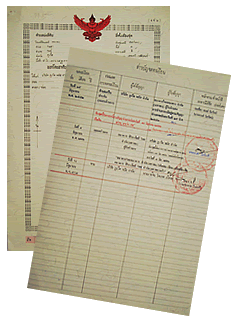
Yellow or blue Thai house book

What is a Tabien Baan (Thai House Book)?
A Tabien Baan (Thai House Book) is an official address and resident registration booklet issued by the local District Office (Amphur). It records the address of a house or condominium and the persons who have their registered residence at that property. The House Book is an administrative document, not proof of ownership, but the official record of the property's registered address and its registered residents.

Thai Property Taxes
Land & Building Tax (2020 onwards)

Thailand Land and Building Tax Rates

Current Tax Bands

Local authorities may impose rates within the applicable statutory limits. Emergency COVID-related reductions have expired.

The annual tax rate depends primarily on the actual use of the land or building and its official appraised value.

Agricultural Use

Land or buildings genuinely used for qualifying agricultural purposes.

0.01%–0.10% Progressive annual rate bands

Statutory ceiling: 0.15%
Based on the official appraised value
Actual agricultural use must be established

Residential Use

Houses, condominium units and other property used as a residence.

0.02%–0.10% Progressive annual rate bands

Statutory ceiling: 0.30%
Principal-residence exemptions may apply
Rented homes remain residential use

Commercial & Other Use

Shops, offices, hotels, factories and other non-residential uses.

0.30%–0.70% Progressive annual rate bands

Statutory ceiling: 1.20%
Applies to commercial and industrial use
No principal-residence exemption

Vacant or Unused Land

Land left vacant or not reasonably used for an appropriate purpose.

0.30%–0.70% Initial progressive annual rate bands

Rate increases by 0.30% every three years
Intended to discourage long-term non-use
Increased rate may ultimately reach 3%

Important: The percentages above summarise the generally applicable progressive rate structure. The Land and Buildings Tax Act establishes statutory ceilings, while the rates actually collected are prescribed under implementing legislation. Exemptions, property value bands and the property's actual use can affect the final assessment.

Thailand no longer levies the former Household and Land Tax or Local Development Tax. Since 1 January 2020, land and buildings have been subject to the Land and Buildings Tax Act B.E. 2562 (2019). The applicable rate depends on the property's actual use and official appraised value, rather than its rental income.

Thailand Property Transfer Taxes and Conveyancing Fees

When ownership of real property in Thailand is transferred, the Land Office may collect several taxes and government fees. Depending on the transaction, these may include the transfer fee, specific business tax, stamp duty and withholding tax. The applicable charges differ according to the type of property, the seller and the period of ownership.

Land Office Documents
Thai script power of attorney

For the registration of rights, obligations or transfer of ownership of immovable property by someone else than the owner of the land the government provincial and local land department's branch offices in Thailand ONLY accept the official standard land department's Thai script 'power of attorney' (the tor dor 21). Any other forms of power of attorney, e.g. a lawyer drafted power of attorney, will not be accepted by the land offices. Below a sample of a translated Thai script 'Tor.Dor.21' land office power of attorney.

Sale Agreement
apartment payment terms

for a resale or off-plan condo in Thailand

In case of a resale condo unit/ apartment in Thailand the purchase price for the unit could be paid by cashier's check to the seller at the time of transfer of ownership of the unit at the land office (standard practice). In this case the buyer of the condo must obtain a cashier's cheque and the foreign exchange documents (FET-form) from his bank inside Thailand required for registration of foreign ownership under Thai condominium laws.

Foreign Condominium Ownership
buying an apartment unit

Under Thai law, a “condominium” refers to a building that is legally registered and licensed under the Condominium Act, allowing it to be divided into individual units with separate ownership rights. These units come with joint ownership of common property such as the land, hallways, elevators, and other shared areas. Ownership is evidenced by government-issued unit title deeds registered with the Land Department. In contrast, private apartment or "holiday" projects that are not licensed under the Condominium Act do not confer legal ownership of the individual units or common areas. Instead, they typically offer only possession rights through private contractual arrangements, such as lease agreements or tenancy contracts, without any legal title or shared ownership.

Condo in Thailand
ownership of a condominium unit by foreigners

under the Thailand condominium actcondo-ownership-deed

In the nineties (the decade that began in 1990) foreigners could own 40% of the aggregate unit space in an apartment building registered under the Thailand Condominium Act (i.e. in case of 100 equal units 40 could be owned freehold by foreigners). Between April 1999 and April 2004 there was an exception created (condominium act no. 3 1999) which under certain rules and conditions and in specified areas allowed foreigners to own 100% of the aggregate unit space in a condo project. Currently foreigners are allowed to own up to 49% of the aggregate unit space in a condominium.

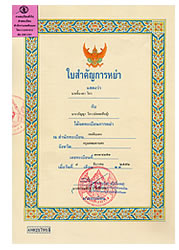
Thai marriage certificate issued by a district office in Thailand
Marriage Certificate

Thai Family Law
civil marriage in Thailand

Updated , minor revisions reflecting the Marriage Equality Act changes.

Gender-neutral interpretation: References in this article to “husband and wife” or “man and woman” should be read as “spouses” or “persons”. This reflects the Marriage Equality Act (effective January 2025), which applies equally to all married couples.

Marriage in Thailand is governed by the Civil and Commercial Code book 5, sections 1435 to 1535. A marriage (section 1457) can take place only if the man and woman two persons (who are at least 17 18 years old (with parental consent required if under 20)) agree to take each other as husband and wife spouse, and such agreement must be declared publicly before the Registrar in order to have it recorded by the Registrar. Marriage in Thailand is created and completed on formal registration and inclusion in the government's marriage register.

Condominium Unit Ownership
and inheritance of foreign ownership

The main legal requirements and limitation of foreign ownership of condo units in the Kingdom of Thailand can be found in section 19 of the Thailand condominium act, that is, (1) not more than 49% of the total floor area of all units in a condo licensed apartment building combined can be foreign owned (51% must be Thai owned), and (2) every foreigner buying a condo in Thailand must qualify for foreign ownership under section 19 paragraph 1 of the condo act.

Thai divorce certificate sample issued in Thailand
Divorce Certificate

Thai Divorce Law:
Legal Grounds and Termination of Marriage

Last updated:

Divorce in Thailand is governed by the Civil and Commercial Code and may occur either by mutual consent or by court judgment (section 1514). This article outlines the legal grounds for divorce, how the process works for Thai and foreign spouses, and what the law specifically states. Whether you're considering divorce or just seeking to understand your rights, this guide explains the essentials of Thai divorce law. Divorce in Thailand is the formal legal process that ends a marriage.

sample ownership condo deed

Apartment buildings
and condominium license

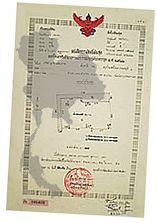
Only multi unit apartment buildings licensed under the condominium act B.E. 2522 and registered with the land department as 'condominium' offer freehold ownership of the apartment units and government issued ownership unit title deeds (image on the right). Private apartment projects (not having obtained a condominium license) do not offer ownership nor individual unit title deeds but only possession of the units under private (lease) contract structures.

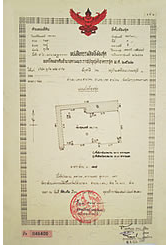
sample thai land title deed showing back of title

Land Laws
land title documents

Land documents and deeds evidencing a person's legal right or title to land. Large areas of Thailand do not have the status of titled land or land confirmed for private use and possession but are government or public land or at the best forms of land claims generally used by farmers. No juristic acts like a sale, lease, superficies or usufruct can be registered over these types of land, this is only possible over land titles offering private ownership or a confirmed right of possession, issued by the land department of Thailand.

Buying a Condominium Unit
Foreign Currency Remittance Requirement

To qualify for foreign ownership under the Thailand Condominium Act, a foreign purchaser of a condominium unit must generally remit the full purchase price into Thailand in foreign currency. This requirement does not apply where the purchaser qualifies under one of the alternative grounds set out in Section 19 of the Condominium Act, for example as a lawful resident in Thailand.

Due diligence
lawyer's real estate buyer's checklist

Whether you lease land or purchase real property in Thailand, the property ownership title deed needs close scrutiny. The seller must be able to identify himself as the owner and provide complete certified copies of the documents of the land, land and house or condominium unit (e.g. a copy of the office government issued ownership's title deed front and back side, the previous land office sale agreement and other relevant documents). When the property includes a house the seller must submit a copy of the house book and building permit or previous sale agreement confirming his ownership.

Limited Company
nominee shareholders in a Thai company

A limited company in Thailand must have a minimum of 3 shareholder at all times. Thai nationals operating a business under a company often use nominee shareholders to complete the number of 3 shareholders in the limited company. There is no general restriction for Thais that prohibited the use of nominee shareholders in a business. This is different for foreigners. Foreign investors are prohibited from using nominee shareholders in a Thai company under the foreign business act. Also bearer shares (shares owned by whoever holds the physical share certificate) are prohibited.

Page 1 of 2